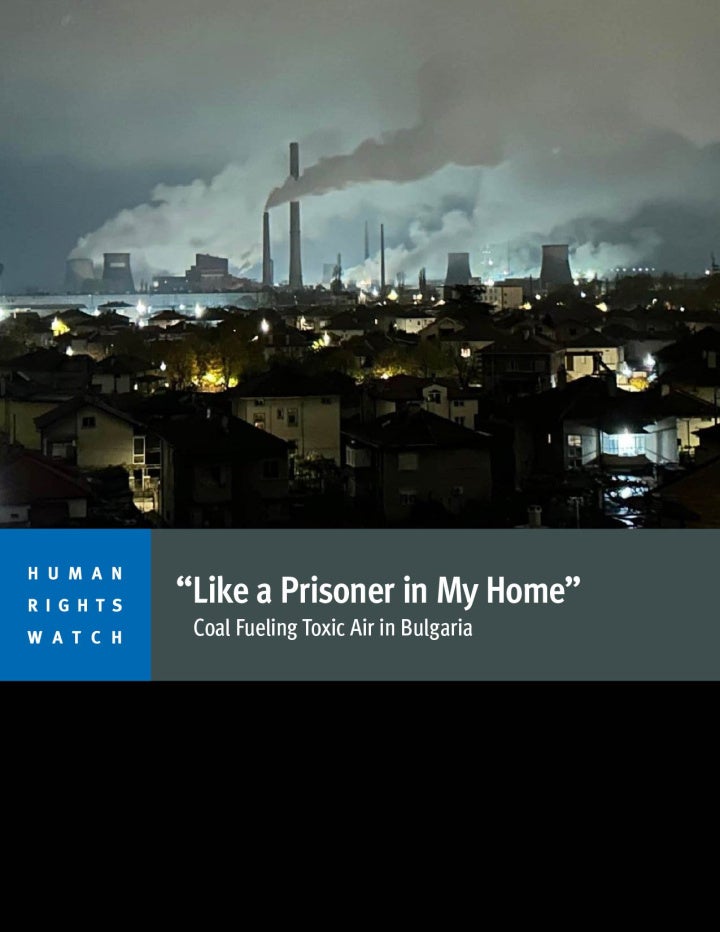
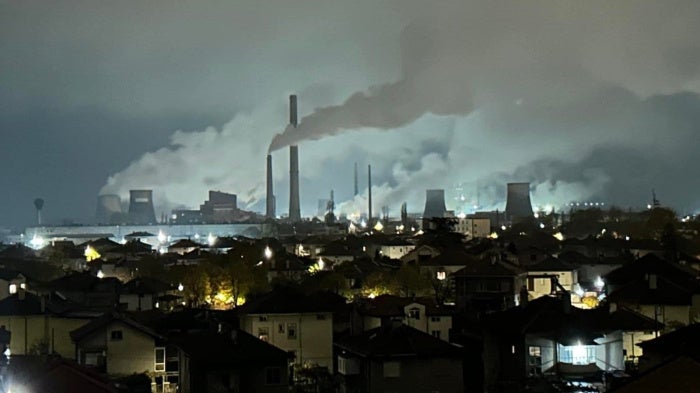
The 45-page report, “Like a Prisoner in My Home’: Coal Fueling Toxic Air in Bulgaria” analyzes the data revealing alarmingly high air pollution levels in Dimitrovgrad, a town in southern Bulgaria, which hosts Maritsa 3, one of the country’s oldest coal plants. Maritsa 3 emits hazardous air pollutants, which contribute to poor air quality that harms the health of local residents, particularly children.
Restrictions on Bathroom and Locker Room Access for Transgender Youth in US Schools
This report examines how transgender youth are adversely affected by rules that bar them from using bathrooms and locker rooms matching their gender identity. Transgender students described how these rules have given rise to physical and verbal harassment, and adversely affected their physical and mental health, academic achievement, and participation in school.
This report documents the economic and social pressures that lead to child marriage, and the devastating consequences of those marriages. Nepal has the third-highest rate of child marriage in Asia, with 37 percent of girls marrying before age 18, and 10 percent before 15, though the minimum age of marriage for both women and men is 20 under Nepali law. An estimated 11 percent of boys marry before 18. Nepal’s government has made some effort to end the practice, but a long-promised national plan has met with delays.
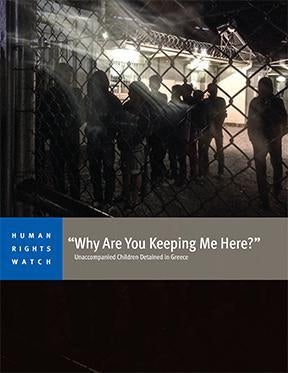
This report documents arbitrary and prolonged detention of children in violation of international and Greek law. Children are held in unsanitary conditions, sometimes with unrelated adults, in police stations and detention centers where they have little access to basic care and services. The report is based on interviews with 42 children who were or had been detained, as well as visits to two police stations and two detention centers in mainland Greece.
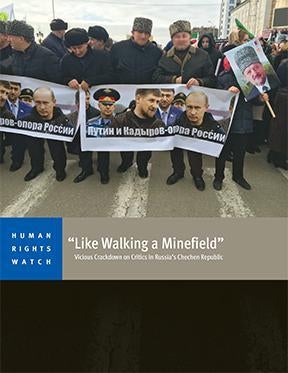
Vicious Crackdown on Critics in Russia’s Chechen Republic
This report describes how local authorities punish and humiliate people who show dissatisfaction with or seem reluctant to applaud the Chechen leadership and its policies. The report also details increasing threats, assaults, and detention of journalists and human rights defenders.
Military Use of Schools in Afghanistan’s Baghlan Province
This report documents the occupation and other military use of schools by state forces and the Taliban in Baghlan province in northeastern Afghanistan. It is based on interviews with more than more than 20 school principals, teachers, and administrators, as well as local families affected by the conflict. As school districts across Afghanistan increasingly find themselves on the front lines of the country’sarmed conflict, students risk their lives at schools being used by soldiers which may become military targets, or are deprived of an education until facilities are found elsewhere.
Barriers to Education for Syrian Refugee Children in Jordan
This report describes Jordan’s generous efforts to enroll Syrian children in its public school system, which was struggling with capacity and quality issues even before refugees began to arrive from Syria. But Human Rights Watch also documented barriers to education, including asylum-seeker registration requirements that many Syrians cannot meet; punishments for refugees working without permits that contribute to poverty, child labor, and school drop-outs; and a bar on enrollment for children who have been out of school for three or more years. Jordan has eased some restrictions, but authorities should expand efforts to realize the fundamental right to education for all Syrian children, Human Rights Watch said.
Discrimination on Grounds of Gender Identity and Sexual Orientation in Sri Lanka
This report finds that people who don’t conform to gender norms face arbitrary detention, mistreatment, and discrimination accessing employment, housing, and health care. The government should protect the rights of transgender people and others who face similar discrimination, Human Rights Watch said.
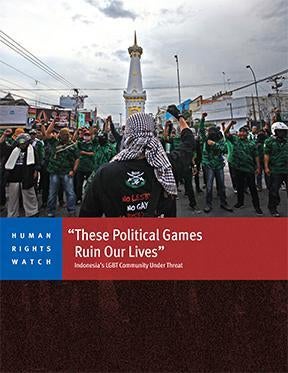
This report documents how officials’ biased and untrue statements about lesbian, gay, bisexual, and transgender (LGBT) people provided social sanction for harassment and violence against LGBT Indonesians, and even death threats by militant Islamists. State institutions, including the National Broadcasting Commission and the National Child Protection Commission, issued censorship directives banning information and broadcasts that portrayed the lives of LGBT people as “normal” as well as so-called “propaganda” about LGBT lives. That combination of discriminatory rhetoric and policy decisions harmed the physical security and right to free expression of LGBT people across the country.
Abuses against Children Detained as National Security Threats
This report documents the arrest and detention of children for alleged association with non-state armed groups or involvement in conflict-related offenses. Overbroad and vague counterterrorism legislation adopted in response to extremist armed groups such as the Islamic State and Boko Haram has increased the detention of children perceived to be security threats. Human Rights Watch specifically examined the detention and treatment of children in Afghanistan, the Democratic Republic of Congo, Iraq, Israel/Palestine, Nigeria, and Syria.
Arbitrary Detentions, Enforced Disappearances, and Torture in Eastern Ukraine
This report is based on interviews with 40 victims of abuses, their family members, witnesses, victims’ lawyers, and other sources. Amnesty International and Human Rights Watch documented nine cases of arbitrary, prolonged detention of civilians by the Ukrainian authorities – including some cases of enforced disappearances – in informal detention sites and nine cases of arbitrary, prolonged detention of civilians by Russian-backed separatists. Most of the cases detailed in the report took place in 2015 and the first half of 2016.
Abuses in Counterterrorism Operations in Nairobi and in Northeastern Kenya
This report documents 34 instances in multi-agency security operations in which the military was actively involved in raiding homes and compounds to arrest people who were allegedly suspected of links with the armed Islamist group, Al-Shabab. But months, and in some cases over a year, later, suspects have not been charged with any crimes and families cannot locate them. In each case, although families reported the disappearance to the police and sought help from various authorities, the authorities failed to inform them of the detainees’ whereabouts or to properly investigate allegations of abuse.
Barriers to Education for Syrian Refugee Children in Lebanon
This report documents the important steps Lebanon has taken to allow Syrian children to access public schools. But Human Rights Watch found that some schools have not complied with enrollment policies, and that more donor support is needed for Syrian families and for Lebanon’s over-stretched public school system. Lebanon is also undermining its positive education policy by imposing harsh residency requirements that restrict refugees’ freedom of movement and exacerbate poverty, limiting parents’ ability to send their children to school and contributing to child labor. Secondary school-age children and children with disabilities face particularly difficult obstacles.
This report examines in detail the panoply of formal and informal barriers women in Saudi Arabia face when attempting to make decisions or take action without the presence or consent of a male relative. As one 25-year-old Saudi woman told Human Rights Watch, “We all have to live in the borders of the boxes our dads or husbands draw for us.” In some cases, men use the permission requirements to extort large sums of money from female dependents.
This report documents how child workers work dangerous jobs in Afghanistan’s carpet industry; as bonded labor in brick kilns; and as metal workers. They perform tasks that could result in illness, injury, or even death due to hazardous working conditions and poor enforcement of safety and health standards. Many children who work under those conditions combine the burdens of a job with school, or forego education altogether. Working compels many children in Afghanistan to leave school prematurely. Only half of children involved in child labor attend school.
Abuse and Exploitation of Migrant Domestic Workers in Oman
This report documents how Oman’s kafala(sponsorship) immigrant labor system and lack of labor law protections leaves migrant domestic workers exposed to abuse and exploitation by employers, whose consent they need to change jobs. Those who flee abuse – including beatings, sexual abuse, unpaid wages, and excessive working hours – have little avenue for redress and can face legal penalties for “absconding.” Families rely on migrant domestic workers to care for their children, cook their meals, and clean their homes. Yet many migrant domestic workers, who rely on their salaries to support their own families and children at home, face cruel and exploitative conditions.