Summary
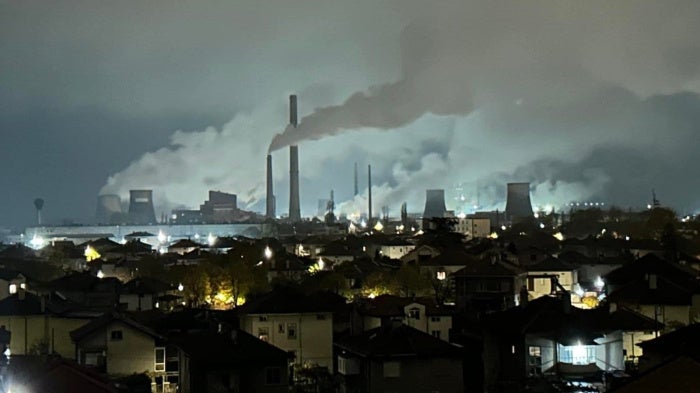
Bobi, a 7-year-old boy who lives in Dimitrovgrad, a town in southern Bulgaria, was diagnosed with chronic asthma when he was just six months old. His mother, Maria, never goes a day without worrying about him. Bobi has been exposed to toxic air pollution his whole life, profoundly harming his health. He is frequently hospitalized because of asthma attacks and often misses school. “I want the government to know that I no longer want to be sick and that I want clean air to breathe,” Bobi said.
Bobi is not alone. Across Dimitrovgrad, both residents and health professionals report serious and widespread health impacts from air pollution. According to health professionals interviewed by Human Rights Watch, residents of Dimitrovgrad experience high rates of respiratory illnesses like bronchitis, asthma, and lung cancer. Children in Dimitrovgrad appear to have higher rates of respiratory illnesses than those living in nearby cities, according to government health data. But chronic illness in childhood harms more than health. Some children in Dimitrovgrad regularly miss classes due to their illnesses.
Fortunately, there is some relief in sight. Like all EU-member states, Bulgaria is required by the revised Ambient Air Quality Directive (AAQD) to improve its current air quality standards by December 2026 and ensure full compliance with the new standards by 2030. While not as strict as WHO guidelines, the new 2030 standards will be more protective of public health and will go a long way toward fulfilling the right to health in Bulgaria.
But the obligation to improve its air quality puts Bulgaria on a collision course with the country’s ten coal-fired power plants. According to a 2024 study by the Center for Research on Energy and Clean Air, air pollution from Bulgaria’s coal plants leads to 333 excess deaths per year. Coupled with chronic and acute illnesses linked to coal plants, this study estimated that the health harms of burning coal cost Bulgaria €742 million annually.
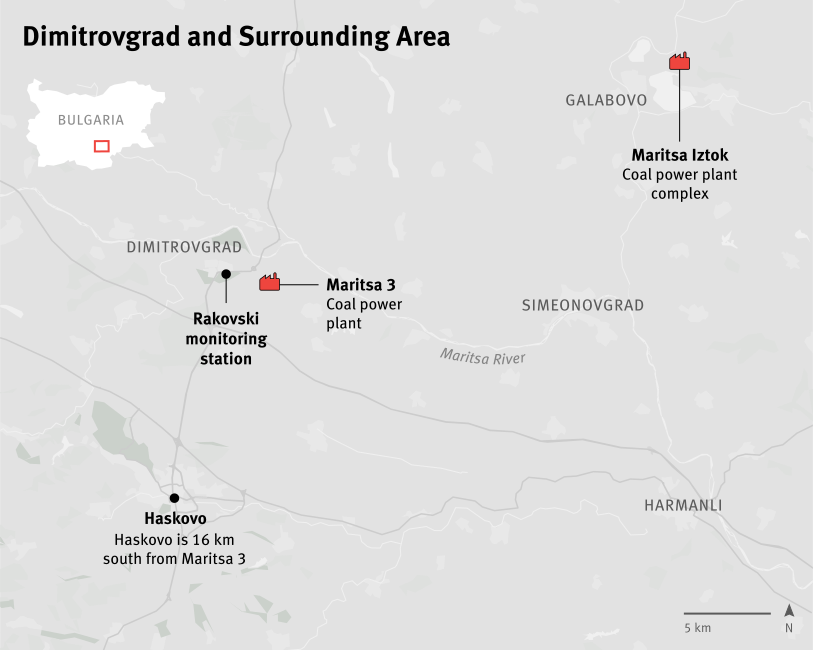
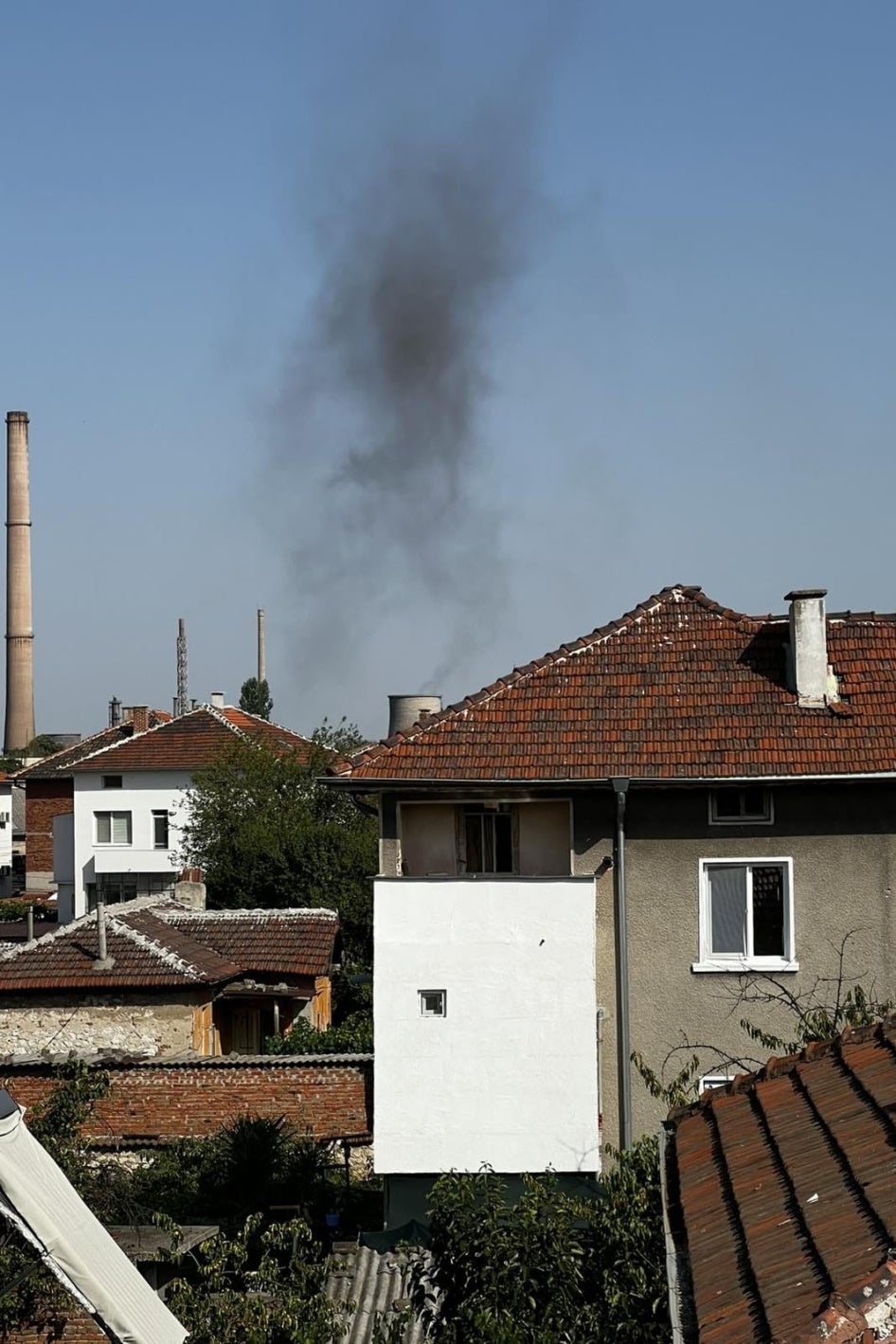
Dimitrovgrad hosts one of the country’s oldest coal-fired power plants – Thermal Power Plant Maritsa 3 (“Maritsa 3”). Like Bulgaria’s nine other coal plants, Maritsa 3 emits hazardous air pollutants that contribute to poor air quality, according to Human Rights Watch’s analysis of publicly available official data. There are various other sources of air pollution in Dimitrovgrad – including from heating, transport, and industry. But Maritsa 3’s contribution to Dimitrovgrad’s high concentrations of sulfur dioxide (SO2), a pollutant harmful to human health, has been acknowledged by environmental authorities for years. In correspondence with Human Rights Watch, Bulgaria’s Ministry of Environment and the Regional Inspectorate of Environment and Water (RIEW) stated, “The source of sulfur dioxide emissions into the atmosphere in the territory of Dimitrovgrad is Maritsa 3.”
Dimitrovgrad’s high concentrations of SO2 prompted the administrative shutdown of Maritsa 3 in April 2022. For its part, the company that operates Maritsa 3 acknowledges that the plant contributes to SO2 levels, but stresses that the plant’s emissions have complied with current (2008) limits and not resulted in any administrative sanctions since 2022. They also emphasize other contributing factors, “including meteorological conditions, domestic heating, and pollution from power plants outside the city.”
In researching this report, Human Rights Watch analyzed the publically available official monitoring data to assess the impact of Maritsa 3’s operation on SO2 levels in Dimitrovgrad, controlling for several environmental conditions, as well as for the operation and output from the Maritsa Iztok complex of coal plants approximately 40 kilometers to the east.
We found that whether the Maritsa 3 plant in Dimitrovgrad is operating is the strongest predictor of SO2 levels in the city. Intermittent shutdowns of Maritsa 3—following periods when SO2 levels spike—as well as low overall electricity production contribute to Dimitrovgrad’s compliance with the current (2008) SO2 standards.
But air quality standards will soon become stricter. In both written responses to Human Rights Watch and in-person meetings with environmental authorities, the Bulgarian government has made clear that it intends to tighten air regulations on schedule. Our analysis of the publically available official data shows that even if Maritsa 3 continues to operate well below capacity and intermittently shuts down, as it has done since 2022, Dimitrovgrad will frequently exceed the daily and hourly SO2 levels once those standards are tightened.
Asked how it was preparing to meet the revised air quality standards, Maritsa 3 said it was “in the process of strategic planning and assessing the necessary measures in order to adapt to the new, significantly stricter restrictions.”
But at the national level, Bulgaria’s new air quality standards will force its government to confront an issue it has long sought to delay: a national plan to phase out its coal-fired power plants. In 2023, the Bulgarian government decided to delay its coal phase-out to 2038, contradicting a climate science-aligned energy transition pathway, public health guidance, and the more ambitious commitments of other EU countries that are similarly reliant on coal, like the Czech Republic and Romania.
The delay in phasing out coal has further slowed Bulgaria’s implementation of key reforms needed for the energy transition, causing the country to miss a significant economic opportunity. This is despite several scenarios showing that Bulgaria could reduce the use of coal to generate electricity to negligible levels by 2030 without compromising energy security.
Bulgaria has a crucial opportunity to plan and fund its transition through accessing EU funding from the Just Transition Fund (JTF) and the Recovery and Resilience Facility (RRF). However, repeated delays in setting up a credible and ambitious roadmap for the energy transition along with failure to implement key energy sector reforms have put €1.2 billion in EU Just Transition funding at risk, as well as portions of the EU Recovery and Resilience Fund.
To safeguard health and align with EU climate commitments, Bulgaria should adopt a clear and enforceable roadmap to phase out all coal-fired power plants by 2030, alongside robust measures to ensure a just and equitable transition for workers, communities, and industries toward a sustainable, renewable-based economy.
Recommendations
To Bulgaria’s Ministry of the Environment and Water
Immediately begin the transposition of the EU’s revised Ambient Air Quality Directive (AAQD) 2024/2881 into national legislation to meet the December 2026 deadline and ensure full compliance by 2030. Ensure meaningful public participation at all stages of the transposition, including from environmental non-governmental organizations.
Ensure that all coal-fired power plants in Bulgaria fully comply with the prevailing air quality standards. Require emissions to be accurately and transparently monitored and reported and publically accessible. In cases of non-compliance, take appropriate enforcement actions, including the revocation of operating permits.
Provide clear, actionable, and accessible information on air pollution and protective measures for everyone in Bulgaria. Ensure that warning systems are available in appropriate languages and accessible formats- particularly for at-risk groups such as children, older adults, and people with chronic conditions. Deliver specific guidance for parents during high pollution events through clear communication plans involving local authorities, media, hospitals, health centres, and schools.
To Bulgaria’s Ministry of Health
Enact measures to better protect at-risk communities, such as early warning and real-time air quality alerts, temporary restrictions on high-emission activities during peak pollution or outdoor activity periods, and adaptation measures to improve indoor air quality in residential housing and public facilities, like schools.
Publish real-time health advisories tied to air quality alerts in an understandable and accessible format.
Collect and publish disaggregated and anonymized data regarding the health impacts of air pollution in general, and emissions from coal-fired power plants in particular. Prioritize protection of communities living closest to such facilities and groups most at risk of exposure and health harms, including people with chronic health conditions and disabilities, older people, children, and pregnant people.
Ensure effective communication of the information about health risks and preventive measures through a clear strategy developed in collaboration with local authorities and delivered via trusted channels such as media, hospitals, health centres, and schools.
Educate healthcare providers about the health risks associated with exposure to air pollution, treatment approaches, and prevention strategies.
To Bulgaria’s Ministry of Energy
Create a clear timeline for the phased closure of coal plants by 2030, in line with EU climate targets, while supporting a fair and equitable transition for workers, communities, and industry away from fossil fuels toward a renewable green economy.
Adopt policies that accelerate the deployment of renewable energy, alongside the electrification of key fossil fuel–dependent sectors and the implementation of robust energy-saving measures.
To Bulgaria’s Ministry of Regional Development
Accelerate implementation of the Territorial Just Transition Plans (TJTPs) within a clear timeline and ensure the involvement of local authorities, trades unions, and civil society.
Launch a national information campaign to explain how Just Transition funds could benefit workers and local communities.
Track and publish employment transition outcomes including with numbers of workers reskilled, jobs created, and businesses supported.
To Bulgaria’s Ministry of Education
Ensure children’s access to education during air pollution events, including through standardized remote learning plans. Ensure equitable access to these resources and adequate support, including for low-income families—and psychological assistance, during prolonged interruptions to in-person learning.
Work closely with relevant ministries to ensure any new information about air pollution and new warning systems is developed and shared in an age-appropriate manner at all levels of schooling.
To the European Union
Request a detailed national roadmap from Bulgaria outlining legislative steps, timelines and responsible bodies to ensure the transposition of the revised Ambient Air Quality Directive 2024/2881 into national law by the 2026 deadline.
Offer support to Bulgarian ministries and municipalities for drafting transposition legislation, developing air quality action plans, and building capacity for local monitoring and enforcement.
Provide technical assistance to the Bulgarian government to implement Territorial Just Transition Plans (TJTPs) and ensure compliance with EU climate and energy targets.
Methodology
In November 2024 and February 2025, Human Rights Watch interviewed 22 Dimitrovgrad residents about their experiences of air pollution (including six men, fifteen women, and one child) as well as five health professionals, two former public officials, two journalists, and four local activists. Human Rights Watch also met with the mayor of Dimitrovgrad, officials in the ministries of the environment and health, former ministers, trade union representatives, and European Union officials.
Human Rights Watch conducted extensive statistical analysis of publically available official data. Data on electricity output from Maritsa 3 and the Maritsa Iztok complex was downloaded from the ENTSO-E Transparency Platform.
To assess the impact of coal production on air quality in Dimitrovgrad, Human Rights Watch analysed PM10 and SO2 pollutant levels. We found that the city consistently experiences elevated PM10 concentrations, even when the plant is not operating. Consistently, our analysis focuses on the relationship between plant operations and SO2 emissions, as coal-fired power plants are a major source of SO2, which in turn contributes to broader PM2.5 and PM10 air pollution.
Data on sulfur dioxide (SO2) from the official government monitoring stations at Dimitrovgrad and other Bulgarian cities was sourced from the Bulgarian government and the European Environment Agency. Historical weather and environmental data for Dimitrovgrad was downloaded from the European Centre for Medium-Range Weather Forecasts accessed via the Open-Meteo.com Weather API. All analyses were conducted in R and code is available on Human Rights Watch’s Github page.[1]
Background
Coal Fueling Toxic Air in Bulgaria
Globally, air pollution is one of the most significant risk factors for human health. According to a 2021 literature review published in Environmental Science and Pollution Research, air pollution contributes to many serious health conditions, including chronic obstructive pulmonary disease (COPD) and lung cancer.[2] In recent years, air pollution has also been associated with a higher incidence of other cancers, including breast and uterine cancers.[3]
Air pollution is a major contributor to chronic illnesses and deaths in Bulgaria.[4] The nation’s rate of premature deaths linked to air pollution for 2021 —158 people per 100,000—was the highest in the EU.[5] Public concern is widespread: a survey conducted in 2022 found more than 60 percent of respondents felt the government and energy industry were not doing enough to ensure good air quality.[6]
The impacts of air pollution are particularly severe for at-risk groups like children, older people, and pregnant people. A study carried out by Trakia University in Bulgaria’s Stara Zagora region found that adolescents living in the Stara Zagora region are more likely to develop allergic and autoimmune diseases due to high air pollution levels.[7] Another study on air pollution and health in Bulgaria found that in 2019, 9% of all deaths in the country were related to air pollution.[8]
In many urban areas, like Bulgaria’s capital, Sofia, the primary contributors to poor air quality are vehicle emissions and the burning of garbage to heat homes.[9] Industrial activity is another significant source, particularly for towns near Bulgaria’s 10 coal-fired powerplants. When coal is burned, it releases toxic air pollutants like sulfur dioxide (SO2), nitrogen oxide (NOx), and particulate matter (PM).[10] Bulgaria relies heavily on coal for electricity generation, with 29.1 percent of its electricity coming from coal, compared to 12 percent across the EU.[11] Bulgaria exclusively uses lignite, a high polluting type of coal, to fuel its powerplants.[12] Coal plants accounted for nearly a third of Bulgaria’s 2023 emissions of SO2.
SO2 is a pollutant that is particularly harmful to human health.[13] It can stay in the air up to five days and travel hundreds of kilometers from its source.[14] Even short-term exposure can cause breathing difficulty, chest tightness, and irritation to the respiratory tract.[15] Long-term exposure to SO2 can permanently diminish the lungs’ capacity to function.[16] Exposure to even low concentrations of SO2 is associated with increased mortality from respiratory causes.[17] Those most at risk include people with chronic health conditions and disabilities, older people, children, and pregnant people.
High SO2 levels can also contribute to PM pollution, another dangerous air pollutant.[18] Particulate matter less than 2.5 micrometers in size (known as PM2.5) is especially harmful, as it can penetrate the respiratory tract and enter the bloodstream.[19] Elevated PM2.5 concentrations have been detected around Bulgarian coal plants.[20]
A 2024 study by the Centre for Research on Energy and Clean Air (CREA), a global independent research organization, estimates that air pollution from Bulgaria’s coal plants contributes to an additional 333 deaths per year.[21] These deaths, coupled with other illnesses linked to coal plants, cost Bulgaria an estimated €742 million annually – nearly 1 percent of its gross domestic product.[22]
Coal plants in Bulgaria also produce 58 percent of the country’s total carbon dioxide emissions.[23] In 2022, Bulgaria committed to cutting greenhouse gas emissions from the energy sector by 40 percent by 2025, compared to 2019 levels.[24] This target, along with the adoption of a framework for phasing out coal, is one of the measures that Bulgaria must implement by August 2026 as part of its commitments under the EU-funded Recovery and Resilience Plan.
However, in January 2023, the Bulgarian parliament voted to delay its coal phase-out to at least 2038, and the current government is pushing to drop the commitment altogether.[25] CREA estimated that if Bulgarian coal plants operate at current levels until 2038, they would contribute to an additional 5,500 deaths and cost €14 billion in healthcare and productivity losses between 2023 and 2038.[26]
A 2038 phase-out would place Bulgaria among the last EU member states to phase out coal. This is despite several scenarios indicating that Bulgaria could reduce coal’s role in its electricity mix to negligible levels by 2030 without jeopardizing energy security.
A 2023 study by the Center for the Study of Democracy shows this can be achieved through a major expansion of renewable energy capacity, alongside energy efficiency improvements, electrification of key demand sectors, and electricity imports from neighboring countries during peak demand periods.[27] Meanwhile, Bulgarian coal plants are struggling to remain commercially viable without direct state support, which is being phased out across Europe.
As an EU member state, Bulgaria’s air quality standards are derived from the 2008 EU Ambient Air Quality Directive (AAQD), which sets binding thresholds for key harmful air pollutants, namely SO2, PM10, and PM2.5.[28]
Air pollution from Bulgaria’s coal plants has significantly contributed to the country’s breach of EU air quality standards. In 2022, the Court of Justice of the European Union ruled that Bulgaria violated the 2008 EU standards when it failed to stop SO2 pollution in the country’s southeastern coal region.[29] One year later, the same court found the Bulgarian government had erred when it gave Maritsa East 2, a state-owned coal plant, permission to emit nearly double the SO2 levels allowed by EU law.[30]
In Bulgaria, concentrations of NO2 and PM10 still exceed current daily EU limits. Bulgaria is also among seven EU member states with SO2 concentrations exceeding the WHO daily guideline level of 40 µg/m3.[31]
Fortunately, EU member states adopted a revised version of the AAQD in 2024.[32] This established tighter limits on air pollutants compared to the 2008 standards, for example reducing the daily SO2 threshold from 125 µg/m3 to 50 µg/m3.[33] Bulgaria is required to transpose these standards into national law by December 2026 and ensure full compliance by 2030.[34]
Dimitrovgrad
One of Bulgaria’s oldest coal plants, Maritsa 3, sits on the banks of Maritsa River in Dimitrovgrad, a city in south-central Bulgaria.[35] Located in Haskovo province, this city of 49,000 reflects the challenges of the coal exit unfolding nationally. In addition to Maritsa 3, Dimitovgrad lies approximately 40 kilometers east of three large coal plants in the Maritsa Iztok complex.
Maritsa 3, with a capacity of 120 megawatts, is one of Bulgaria’s smallest coal plants.[36] Owned by TEC Maritsa 3 AD, a joint-stock company registered in Bulgaria, the plant reportedly employed 187 people at the end of 2023.[37] It can produce around 1 percent of Bulgaria’s electricity but, as described below, has operated in recent years at reduced capacity.[38]
In October 2023, activists with the environmental organization Greenpeace in Bulgaria scaled one of Maritsa 3’s 164-foot-high cooling towers and painted on it the word “CRIME.”[39] A week later, Dimitrovgrad residents took to the streets to protest the plant with one overarching battle cry: “Patience has run out.”[40] Protest organizers delivered a letter to the plant management saying they had had enough of the air pollution.[41]
Some residents, including plant workers, see Maritsa 3 as a source of economic security.[42] But others say the city’s poor air quality is worsened by the plant’s emissions and have called for its closure.[43]
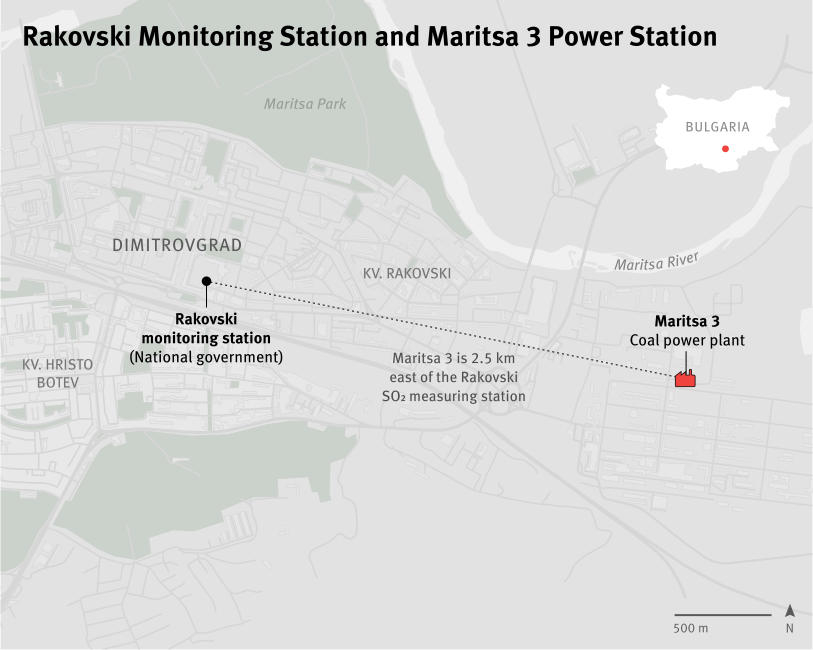
Air quality data in Dimitrovgrad is available from four ground monitoring stations. The national government operates one station, “Rakovski,” located 2.25 kilometers from Maritsa 3.[44] The “Rakovski” station measures SO2 and PM10, but it does not measure smaller and more hazardous PM2.5 concentrations.[45]
There are also two stations run by the Dimitrovgrad municipality: “Poezia Square” and “Aleko Konstantinov.”[46] These stations monitor SO2, PM10, and PM2.5. There is also a station run by a local civil society group, “Breathe Dimitrovgrad,” measuring SO2, PM10, and PM2.5. The data from this station is broadcast to a public channel on the messaging application Viber.
High SO2 levels have been recorded in Dimitrovgrad’s air, and local and regional authorities have linked this to Maritsa 3.[47]
Human Rights Watch’s analysis founds that, between 2021 and 2023, Dimitrovgrad had the second highest average SO₂ level out of all 28 cities where the Bulgarian government has official monitoring stations. During this period, the average SO₂ level in Dimitrovgrad was 87 percent higher than the average of the other 27 monitored Bulgarian cities.[48]
In September 2021, Dimitrovgrad mayor Ivo Dimov sent a letter to the (regional) Haskovo environmental authority (known by its acronym RIEW), drawing attention to SO2 “above the permissible norms” in the city and emphasizing that this was, in his words, “exclusively and solely the result of the work of Maritsa 3.”[49]
On April 21, 2022, Haskovo’s RIEW shut down Maritsa 3 for emitting SO2 above permitted hourly limits.[50] According to RIEW, the average hourly threshold for SO2 (350 µg/m3) was exceeded five times in April before the shutdown, including values above 500 µg/m3.[51] A month later, RIEW noted the shutdown had brought SO2 levels below the legal limit.[52]
In June 2022, the shutdown was overturned by the Supreme Administrative Court, the country’s highest court on administrative law matters, which ruled that the plant closure violated employees’ rights because they were not receiving income.[53] According to the government, in September 2022, Bulgaria’s Ministers of Energy and the Environment met with the plant management and discussed ways to ensure environmental compliance. Maritsa 3 presented a plan to these ministries to ensure the plant operated within environmental standards, which included “using low-sulphur coal and preventive shutdowns when approaching air quality standards”.[54]
Findings
Maritsa 3 and Sulfur Dioxide Concentrations
SO2 Levels Higher when Maritsa 3 is Operating
Bulgaria’s Ministry of Environment and Water, in correspondence with Human Rights Watch, stated, “The source of sulfur dioxide emissions into the atmosphere in the territory of Dimitrovgrad is Maritsa 3.”[55]
For its part, Maritsa 3 noted in correspondence to Human Rights Watch that it contributed to SO2 levels in Dimitrograd but emphasized that overall SO2 levels were caused by multiple sources, including meteorological conditions, domestic heating, and pollution from plants outside the city.[56] Maritsa 3 highlighted the “significant impact of the transfer of air masses coming from the direction of Martisa Iztok Energy Complex.”
In researching this report, Human Rights Watch analyzed the publically available official data documenting the impact of Maritsa 3’s operation on Dimitrovgrad’s SO2 levels, controlling for environmental conditions like temperature, precipitation, relative humidity, solar radiation, wind direction, wind speed, and atmospheric pressure, as well as for the operation and output from the Maritsa Iztok complex of coal plants 40 kilometers to the east.[57]
Human Rights Watch analyzed data on SO2 levels measured at the government Rakovski station between May 25, 2021 and February 28, 2025.[58] During this period, the Maritsa 3 coal power plant was in operation 38 percent of the time and not operating 62 percent.[59]
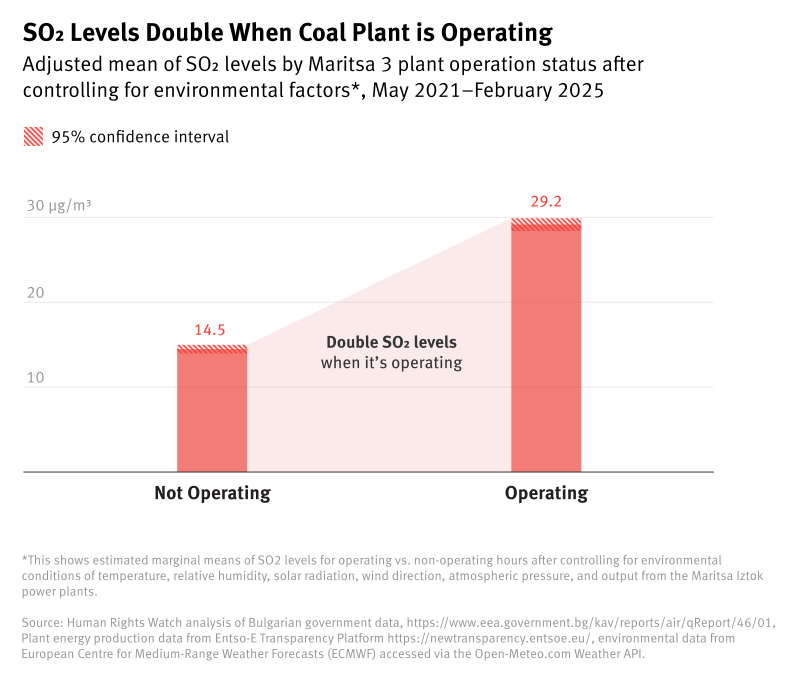
Human Rights Watch analysis found that, while Maritsa 3 is not the only source of SO2 in Dimitrovgrad’s air, whether the Maritsa 3 plant is operating is the strongest predictor of SO2 levels in the city.[60] Average SO2 levels are over twice as high during the hours when the plant is in operation than when it is not operating.[61]
Human Rights Watch also examined whether there is a relationship between the level of electricity output (in megawatts) from the Maritsa 3 plant and hourly levels of SO2.[62] We examined thousands of hourly measurements during periods when the plant was both operational and non-operational.
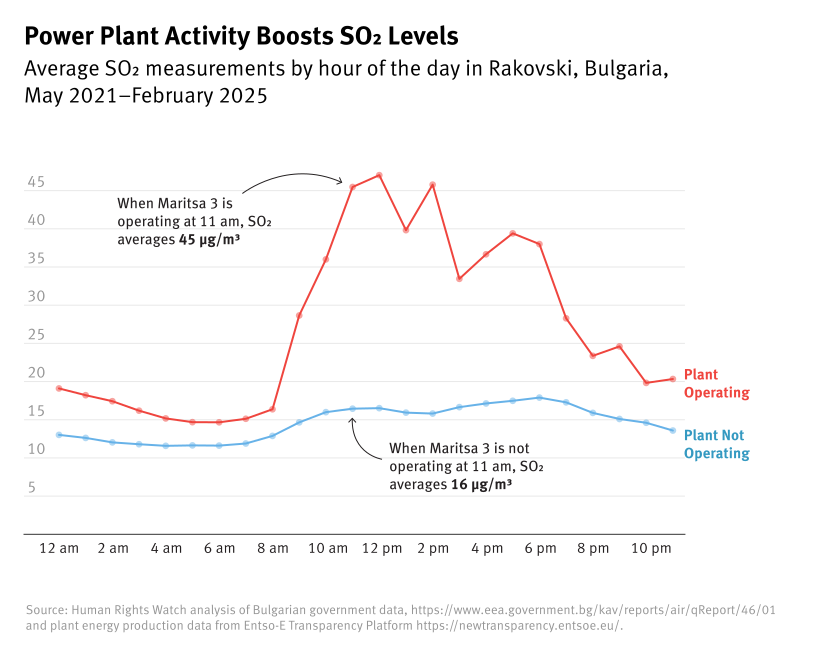
The analysis shows that average SO2 levels were consistently higher during plant operation—regardless of the hour—with the most pronounced increases occurring during daytime hours, when the plant typically runs at higher capacity. A statistically significant relationship is found between output level and SO2 concentrations.
The Maritsa 3 coal plant is 2.5 kilometers east (bearing: 101.3° on the 360 scale°) of the Rakovski measuring station and wind direction is an important factor in measured SO2.
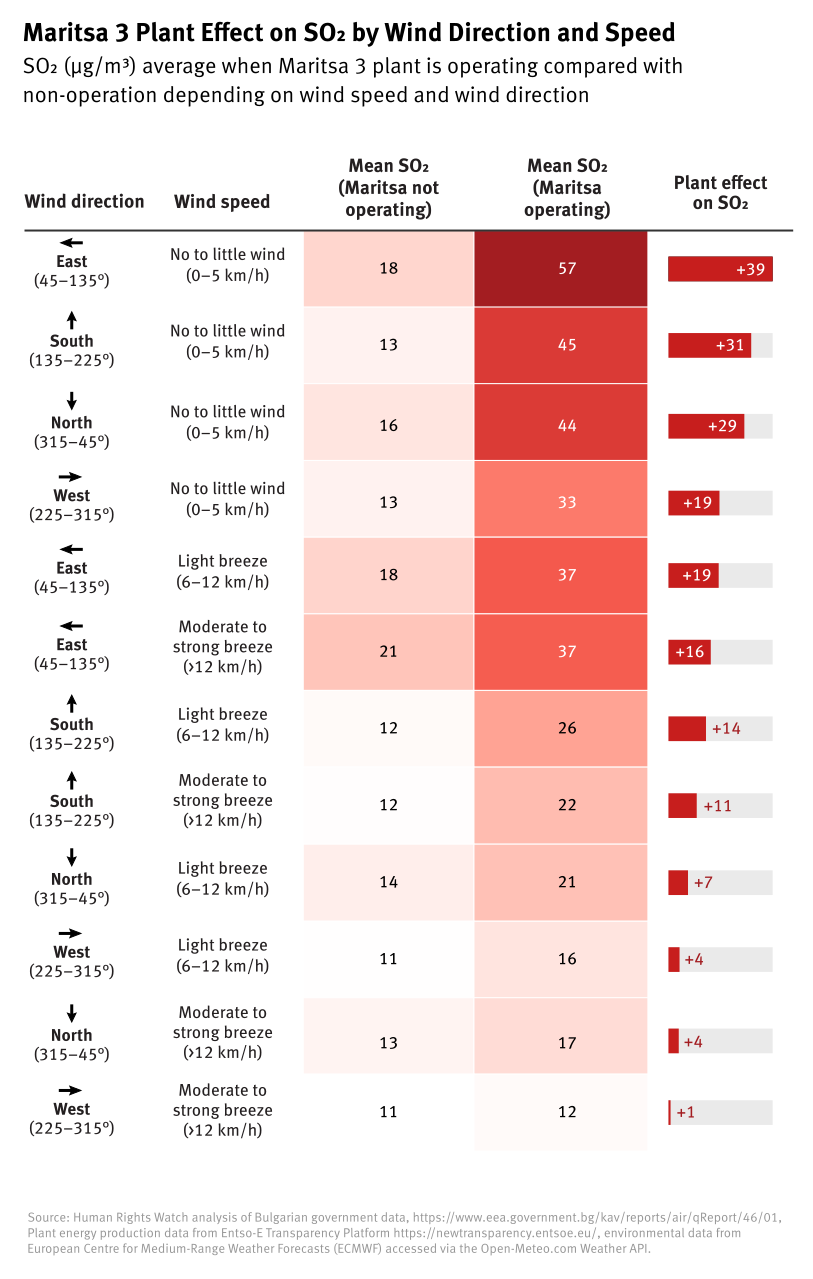
Wind direction has little impact on SO2 levels when Maritsa 3 is not operating but when the plant is operating, winds have a very large impact. SO2 measurements are always higher when the plant operates, no matter which direction the wind is blowing. But when wind is coming from the direction of Maritsa 3 toward the Rakovski monitoring station, the average SO2 measurement more than doubles (41 µg/m³ compared with 19 µg/m³), suggesting this wind is carrying emissions from the plant to the measurement station.
Wind speed is also a factor. When wind speed is higher, and is coming from the north or west, it can blow away any emissions, minimizing the increase in average SO2 levels that occur when the plant operates.
However, when there is no to little wind coming from the direction of the plant (east), plant operation has the greatest impact on SO2, with average measurements increasing by 39 µg/m³. Even with a moderate to strong breeze from the east, SO2 levels jump.
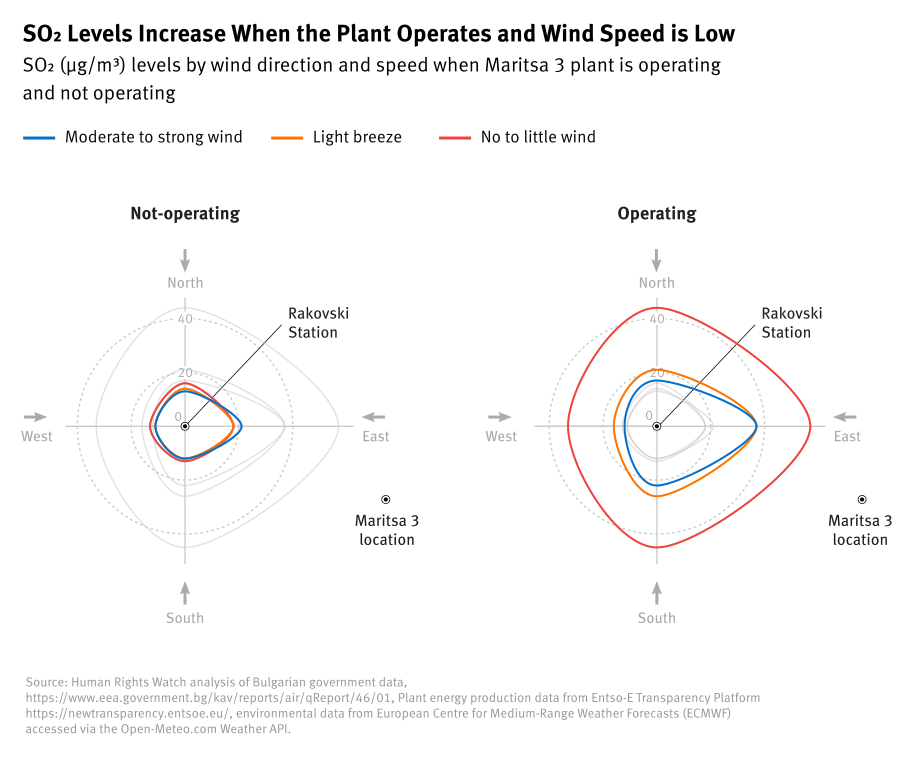
These effects take into account the operation of the three coal power plants in the Maritsa Itzok complex, which is over 40 kilometers east of Dimitrovgrad. These increases in SO2 levels occur regardless of how much electricity the Maritsa Iztok plants are producing, which suggests that the increased levels in Dimitrovgrad are not the result of pollution from the more distant facilities.
Maritsa 3’s Intermittent Shutdowns and Reduced Capacity
Human Rights Watch analyzed whether SO2 levels measured in Dimitrovgrad, which (as noted above) are higher when Maritsa 3 is operating, breached Bulgaria’s current (2008) air quality standards. The current (2008) air quality standards allow short-term hourly concentrations up to 350 µg/m³ per hour – significantly higher than the average daily limit of 125 µg/m³. The current standards also permit 24 exceedances of this hourly concentration per year.
According to Human Rights Watch analysis, Dimitrovgrad exceeded this hourly standard concentration 30 times in 2021 (following the restart of Maritsa 3’s operation on May 25 until the end of 2021.) In correspondence with Human Rights Watch, both the Ministry of Environment and Maritsa 3 acknowledged that Dimitrovgrad exceeded the hourly average SO2 limit more than the permitted 24 times in 2021.[63]
For its part, Maritsa 3 stressed that since 2022, measurements of Dimitrovgrad’s SO2 concentrations complied with limits allowed by current Bulgarian legislation and had not resulted in any administrative sanctions to Maritsa 3.[64]
In correspondence with Human Rights Watch, the Ministry of Environment noted the plant’s operations were being monitored to “prevent air pollution in Dimitrovgrad,” and that between 2021 and 2024, “there has been a downward trend in the number of excessive hourly values recorded by the RaCkovski AIS in Dimitrovgrad,” a trend it attributed “as a result of the [administrative] control exercised over the activities of Maritsa 3 TPP.”[65] This was confirmed by the Regional Inspectorate of Environment and Water (RIEW) in correspondence with Human Rights Watch. The agency also emphasized that, 'Since 2023, there have been no recorded exceedances of the 24-hour average sulfur dioxide limit of 125 µg/m³’.
In 2022, there were 23 exceedances of the hourly standard, in 2023 there were nine, and in 2024 there were 12. The exceedances of the 350 µg/m³ hourly threshold at Rakovski station happened nearly exclusively when the Maritsa 3 plant was operating - over 95 percent of hourly measurements over 350 µg/m³ occurred when the plant was operating.[66] On rare occasions, hourly concentrations were more than three times the current limit, and on one day, they exceeded it by over five times. Given that the current standards permit 24 exceedances per year, Dimitrovgrad has complied with the current (2008) hourly average SO2 standards since 2022.
Based on our analysis of existing data, this compliance is secured by reduced output throughout the year as well as intermittent shutdowns. Sometimes these shutdowns last a few hours, at other times the shutdowns last a few months.
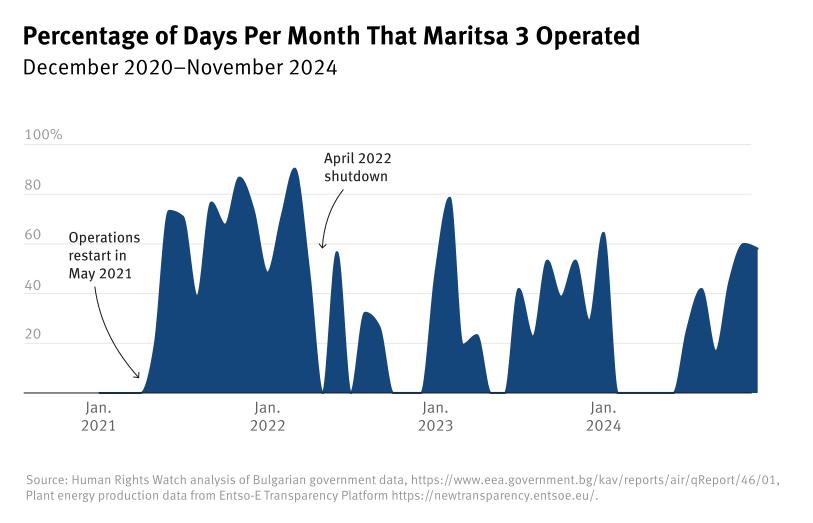
As noted above, on at least one occasion, in April 2022, the shutdown was a mandatory suspension imposed by the Regional Inspectorate of Environment and Water (RIEW) in Haskovo due to violations of permitted hourly limits for SO2. After that closure, plant operations were significantly reduced. Between the plant restarting operations in May 2021 and its first mandatory shutdown in April 2022, the plant ran during 70 percent of days. Following April 2022, the plant only operated during 27 percent of days.
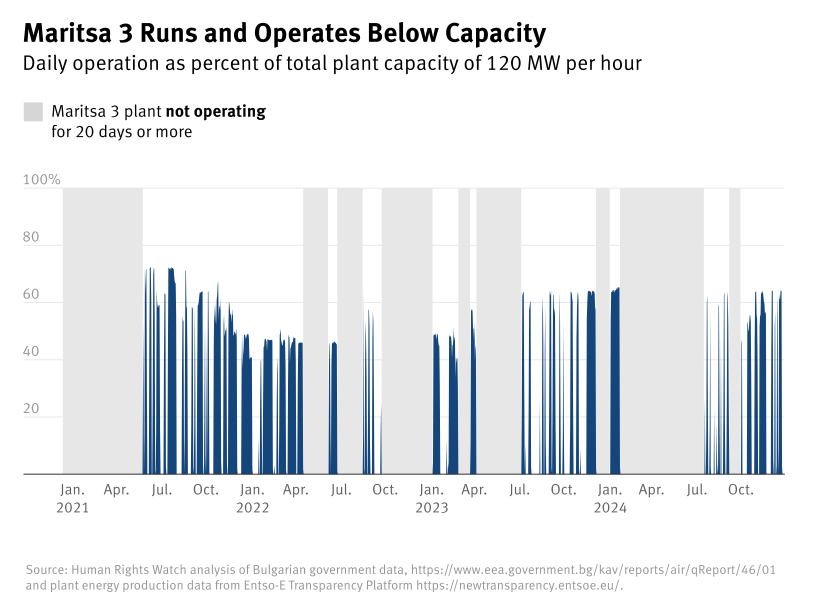
Over the recent four-year period, the plant was operational on only about one-third of all days. When active, it ran for an average of over 20 hours per day at approximately 63 percent of its 120 MW capacity. Due to this limited and inconsistent operation, its total annual electricity production averaged just 16 percent of its full capacity over the period.
According to Human Rights Watch’s analysis, most spikes in daily SO2 levels appear when Maritsa 3 is operating and are regularly followed by shutdowns of five days or more. In the graph below, spikes occur when the plant is operating, shown by the white background, and are followed by shutdowns shown by the orange background. Overall, over two-thirds of all long-term plant closures over the four-year period occurred in the days following a spike in SO2.[67]
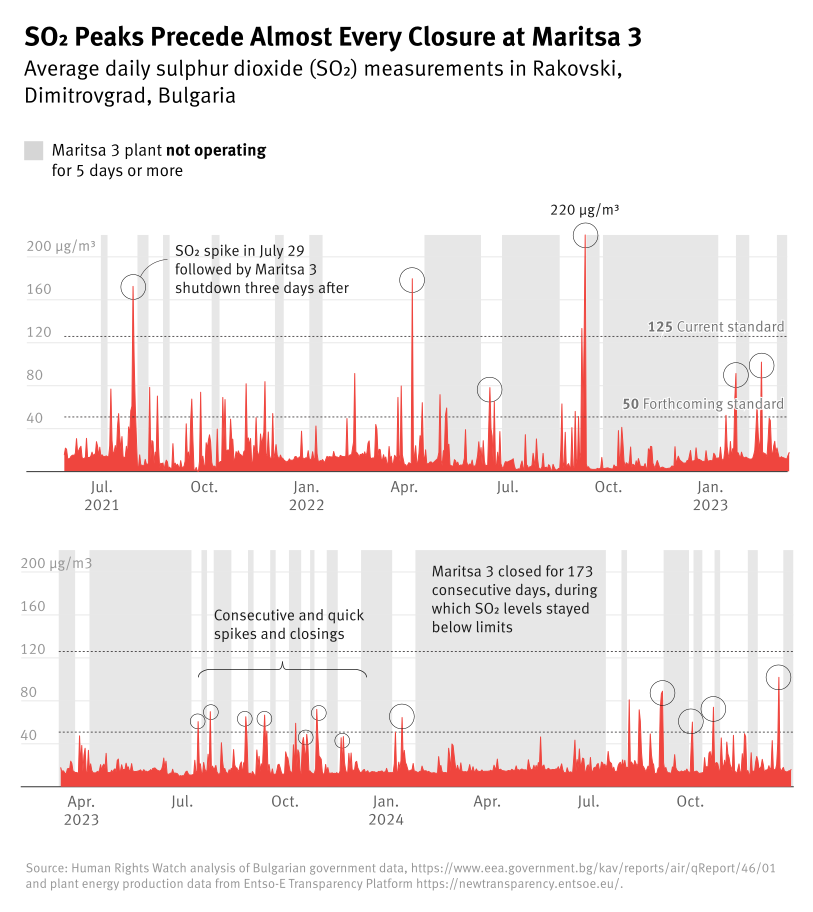
Shutdowns are not only related to daily SO2 levels but also hourly fluctuations. The occurrence of mid-day plant closures alongside spikes in hourly SO2 levels provides statistically significant evidence that Maritsa 3’s operations are closely tied to these short-term pollution peaks. On days with extreme hourly SO2 measurements, the plant was more than twice as likely to shut down during mid-day.[68]
As noted above, Bulgaria’s Ministry of the Environment indicated that Maritsa 3 presented a plan to the Minister of Energy and the Minister of Environment to ensure the plant operated within environmental standards. According to the Ministry of Environment website, the plan involved several measures, including “using low-sulphur coal, improving the efficiency of the combustion process, expanding desulfurization plants, and switching to reduced capacity operations and preventive shutdowns when approaching air quality standards for sulfur dioxide are recorded.”[69]
Responding to an inquiry about the plant’s periodic shutdowns in correspondence with Human Rights Watch, the company said these were not related to SO2 values but rather a reaction to fluctuating market demand for energy.[70] They state that “there is no technical or regulatory grounds to link the operating mode of Maritsa 3 to the sulfur dioxide values to the Rakovski [air monitoring station].” They acknowledged that “the fragmentation in the operating mode (...) significantly limits the possible impact on atmospheric air.”[71]
Maritsa 3 and Forthcoming Standards
The standards adopted by the EU in 2024 and soon to be applied in Bulgaria are more protective of public health than the current 2008 standards, both in terms of pollutant thresholds and the number of exceedances permitted. In correspondence with Human Rights Watch, the Ministry of Environment is clear that “In connection with the adopted revised Directive (EU) 2024/2881 and its implementation, the Ministry of Environment and Water will comply with the new requirements.”[72]
Under the new standards, the daily SO2 limit is lowered from 125 µg/m³ under the 2008 standard to 50 µg/m³, albeit with a higher allowance of 24 exceedances per year. The hourly limit remains (at 350 µg/m³) but the permitted number of annual exceedances of the hourly limit is reduced to just three (from 24).
Human Rights Watch’s analysis, based on existing data, shows that even if Maritsa 3 continues operating (as it has done over the last few years) intermittently and at reduced capacity, Dimitrovgrad is at high risk of SO2 exceedances of forthcoming air quality standards, which would place Bulgaria at risk of non-compliance.
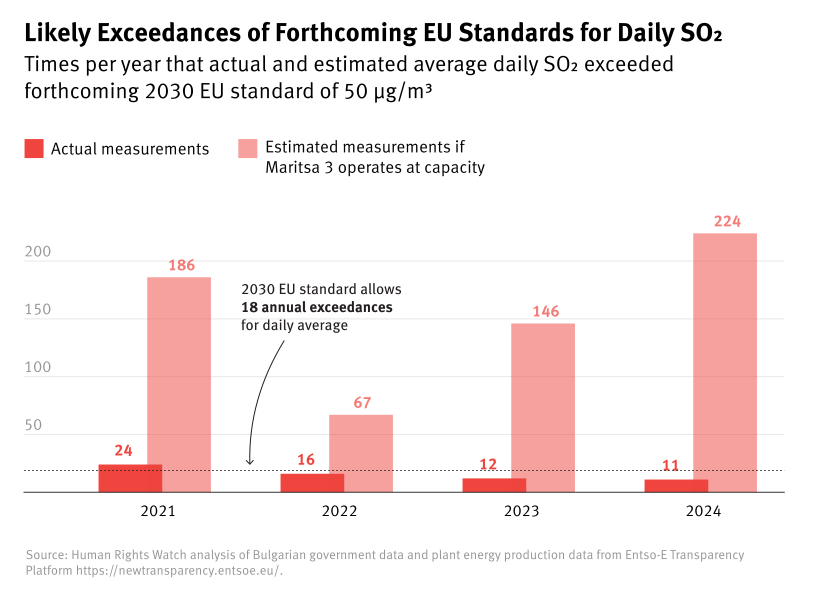
The graph to the left shows how often the measurements at Rakovski station from mid-2021 to the end of 2024 would pass the forthcoming standards for average daily SO2 levels. The graph shows the spikes in average daily SO2 levels and the intermittent closures of the Maritsa 3 plant over the last four years. It also shows that, if the Maritsa 3 plant operated at recent levels, it would more frequently exceed the daily SO2 levels once the standard is reduced to 50 µg/m³.
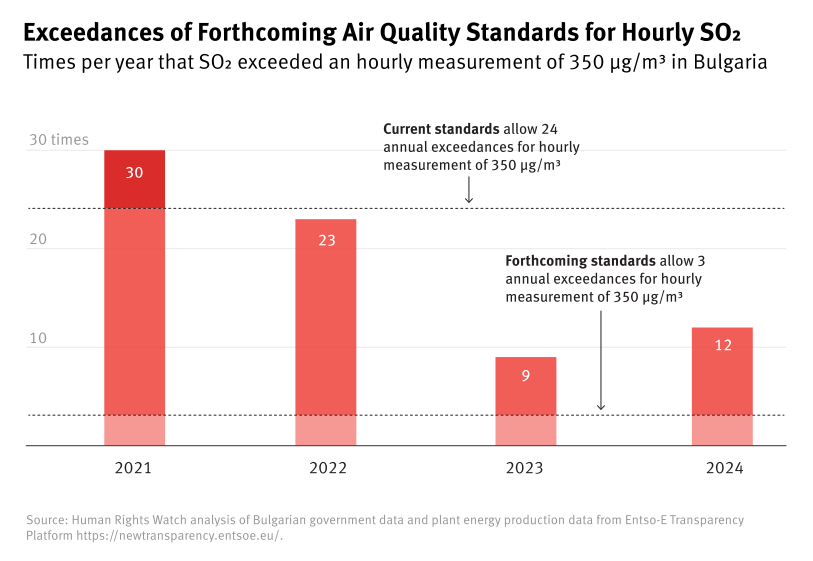
The graph to the right shows how many times per year the measurements at Rakovski station passed the 350 µg/m³ hourly standard from mid-2021 to the end of 2024. It shows the station exceeded the 24 permitted annual exceedances in the current (2008) standards only in 2021. However, the more protective allowance in the forthcoming (2030) air quality standards of three permitted annual exceedances of hourly concentrations would have been far surpassed in every year based on recent measurements.
As a result, it is unlikely that the new EU standards will be met at the Rokovski station in the future, even under the reduced operating levels observed in recent years.
Maritsa 3 noted in correspondence to Human Rights Watch that it was ‘in the process of (...) evaluation of necessary adaptation measures to the new, significantly stricter EU air quality requirements”, including “implementation of modern tools for internal monitoring and automatic emission control of SO2 and other pollutants” and “technical improvements and maintenance of key equipment relation to the combustion process”.
Dimitrovgrad’s Air Pollution and Impacts on Rights
Right to Information
Governments’ human rights obligations to respect, protect, and fulfil the right to health includes the obligation to ensure the right to seek, receive, and impart information concerning health issues. This requires that information regarding health issues, like information about air pollution, is publically shared in a timely and accessible manner that educates the public about hazards to their health.[73]
Residents of Dimitrovgrad interviewed by Human Rights Watch expressed concern about the inadequate information provided by the government regarding air pollution risks and how to protect themselves.
Several people told Human Rights Watch they were not aware of any information regarding air pollution levels provided by the government, even during pollution spikes.[74] Stanislava K, a social worker from Dimitrovgrad, said: “There’s a smell that’s unpleasant, it makes me want to puke…I don’t know if this will affect us long term.” She added: “I can feel when it’s polluted, but I can’t say by how much.”[75]
When confronted with the general concern about a lack of information on air pollution, national government officials told Human Rights Watch that all the national data was published online in real time. “People should say what else they need in terms of access to information,” they added.
Individuals who followed a social media channel sharing air quality data from a private monitoring station—run by the local civil society group “Breathe Dimitrovgrad”—reported heightened concern about pollution exposure. They lacked guidance, however, on how to interpret the data or make informed decisions based on it. Parents said they relied on the social media channel to assess the risks of taking their children outside. “I always check air quality [on the social media channel] before I go out for walks,” one mother of a child with chronic asthma said. “If it is bad, we stay at home.”[76]
Although the Environment Ministry provides some health advice on the official government website, such as suggesting that members of at-risk groups limit outdoor activities when air pollution levels are high, it does not provide detailed practical advice. A pediatric pulmonologist based in Sofia said that parents of her patients often asked for advice on how to protect their children from pollution as they lacked guidance from the government.[77]
Right to Health
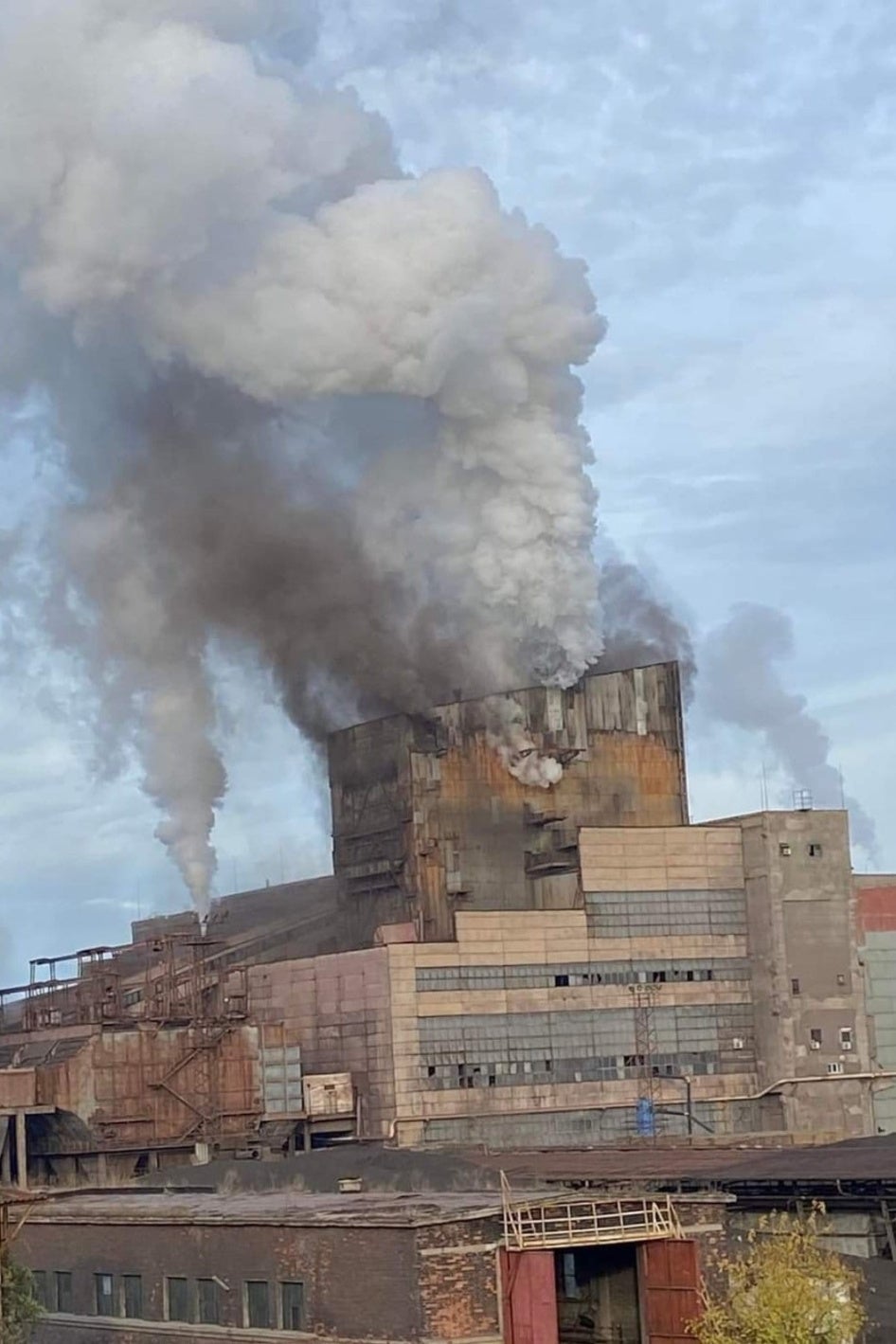
Residents and health professionals in Dimitrovgrad told Human Rights Watch how air pollution had detrimentally impacted the health of residents. In Dimitrovgrad, many residents interviewed by Human Rights Watch experienced severe and potentially life-threatening health conditions, including various cardiovascular or respiratory illnesses.
Stanislava T, a primary school teacher who has a pulmonary disease, says she worries about how air pollution affects her illness: “This winter I felt like a prisoner in my home because I was so sick, and the air was polluted.”[78] Since childhood, she has had a persistent cough that recently worsened. A doctor she consulted about her illness said it was like she had “cut her lungs with a knife.”
A number of residents told Human Rights Watch that they considered that their illnesses were linked to or exacerbated by pollution from the nearby plant.[79] A pulmonologist in Dimitrovgrad who sees patients with asthma and COPD said: “Air pollution is an issue here and it is related to coal.”[80]
While researching this report, Human Rights Watch wrote to the Bulgarian Ministry of Health with several questions and requested data on illnesses caused by air pollution, including respiratory and other air pollution-related illnesses in areas with coal plants, and particularly in Dimitrovgrad. At the time of publication, Human Rights Watch had not received a response.
In correspondence with Human Rights Watch, Maritsa 3 said that it considers the protection of human rights—in particular the rights to health and to a healthy environment—as part of its responsibility to society.[81] When questioned about health concerns raised by Dimitrovgrad residents, Maritsa 3 said no licensed medical facility had issued an official report “establishing or suggesting the existence of such a connection between respiratory diseases in the region and the operation of our thermal power plant.”
Children’s Rights to Health and Education
Parents interviewed by Human Rights Watch described the difficulties in caring for children with chronic asthma.[82] Some said their children could not safely leave the house without suffering acute respiratory symptoms.
Maria, a woman in her mid-40s, worries about her 7-year-old son Bobi, who was diagnosed with asthma at 6 months old. “We have to take him to the emergency room several times a year. When he has an attack, he starts coughing constantly. He is old enough to think about life and death.”[83]
Svetla, a woman in her mid-40s who has two children aged 10 and 12, started worrying about air pollution when her then 1-year-old daughter was diagnosed with asthma and doctors told her that air pollution may add to the problem. “This place is very dirty, very polluted,” she said.[84] Two years ago, Svetla was diagnosed with ovarian cancer, a condition that a 2023 study by researchers from Columbia University and the University of Texas Southwestern found to be more prevalent among those exposed to higher levels of air pollution.[85]
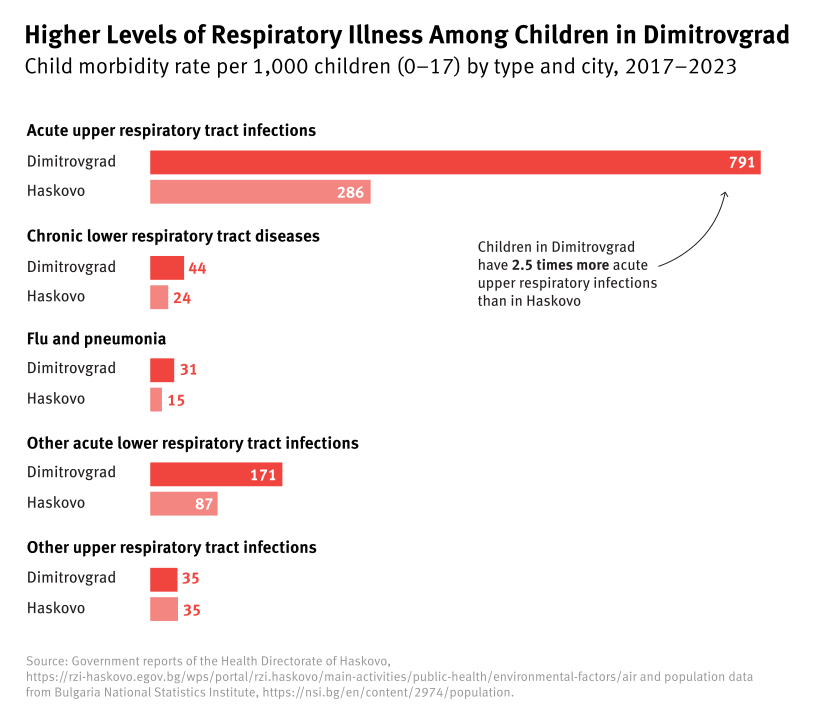
As can be seen below, official data shows the rate of illnesses linked to respiratory diseases among children in Dimitrovgrad remains high compared to the provincial capital, Haskovo, which is only 15 kilometers to the south.
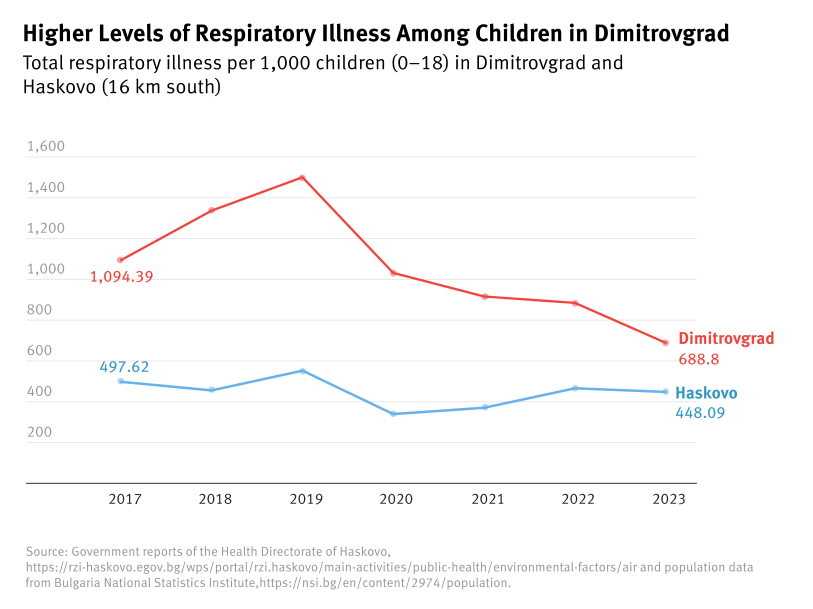
According to data from the Health Directorate of Haskovo and the Bulgaria National Statistics Institute, 791 episodes of acute upper respiratory tract infections per 1,000 children were recorded in Dimitrovgrad between 2017 and 2023, compared to 286 per 1,000 in Haskovo. For lower respiratory tract infections, the rates were 44 and 24 per 1,000 children, respectively. Rates of respiratory illnesses have declined in Dimitrovgrad since peaking in 2019 but are still high.
The health issues associated with high air pollution in Dimitrovgrad also hinder children’s ability to fully access and benefit from education.
Several people told Human Rights Watch their children regularly missed school due to health problems, which their parents believe are getting worse because of air pollution. Research has found that air pollution makes school absenteeism due to respiratory illnesses more likely.[86]
Parents of children with chronic respiratory problems told Human Rights Watch that their many school absences make it hard for them to follow classes and socialize.[87] Academic studies have shown that chronic school absenteeism due to illness can lead to poorer academic performance, which is a risk factor for school dropout and associated long-term health impacts.[88]
Bobi, 7, who has chronic asthma, regularly contracts severe respiratory infections, forcing him to stay at home and miss school. Between September 2024 and early February 2025, he missed 38 school days. “Socially it is hard for him,” his mother Maria, says, referring to frequent panic attacks he has experienced.[89]
Another family reported that their 15-year-old son, who was born prematurely and had severe respiratory problems, did not attend kindergarten at all because he was constantly ill.[90] Another mother, Desislava, said her son was diagnosed with bilateral bronchitis at 9 months old. Now almost 15, he had missed classes 59 days between September 2024 and February 2025 due to respiratory issues.[91] Svetla recalls taking her daughter to the hospital in Haskovo because of severe asthma attacks or other respiratory illnesses at least once a month, resulting in significant absences from school during her first year.[92]
Parents described feeling powerless to protect their children’s health and ensure they had access to education. “I want my children to live in a place that’s not polluted, a place where children can live,” said Alena, 40, a local businesswoman.[93]
Bulgaria’s Just Transition: Challenges and Opportunities
While coal sector wages in Bulgaria are among the highest in the country, making the transition particularly sensitive for workers, the total number of those directly employed by the coal sector is relatively small.[94] According to a report by the Center for the Study of Democracy, around 11,000 people currently work in the coal sector.[95]
While this represents just 0.35 percent of Bulgaria’s workforce, the sector’s importance is more pronounced at the regional level. In coal-dependent regions like Stara Zagora, around 23,800 jobs could potentially be impacted by the transition away from coal.[96] As a result, the economic and social impacts of the coal transition are highly localized with entire communities relying on these jobs. The rights of coal workers and their families should be safeguarded throughout the country’s transition away from coal.
Bulgaria has an opportunity to plan and fund its transition through accessing EU funding from the Just Transition Fund (JTF) and the Recovery and Resilience Facility (RRF). However, repeated delays and missed deadlines by the Bulgarian government along with failure to implement key reforms have already resulted in the loss of critical funds and threaten access to additional funding.
The country is eligible to receive €1.2 billion from the EU’s JTF to support the transition in its most coal-dependent regions.[97] The Fund is expected to mitigate the socioeconomic impacts of the coal phase-out and to create new employment opportunities in Bulgaria’s coal-dependent regions through initiatives such as worker reskilling and renewable energy investments.[98] However, access to this funding is conditional on meeting specific requirements, including a clearly defined coal phase-out timeline.[99]
In 2022, Bulgaria lost €97 million in funding from the JTF due to delays in submitting detailed plans on how it would support workers in the coal mining sector.[100]
Bulgaria has also faced challenges with accessing the RRF, under which the country is eligible to receive €6.3 billion to support the green and digital transitions.[101] In 2024, the European Commission found that Bulgaria had not completed several important reforms, including measures to achieve climate neutrality by 2050.[102] Consequently, in 2025, Bulgaria lost €653 million in RRF funding.[103] If these outstanding issues are not resolved soon, Bulgaria could risk losing further portions of the RRF funding.
Lack of political will and frequent changes in government have delayed and weakened the implementation of Bulgaria’s decarbonization and energy transition commitments. Resistance from coal sector workers and trade unions, citing fears of job losses, has further slowed progress.[104] At the same time, the national debate on the just transition has been shaped by disinformation and the rise of anti-EU rhetoric during recent election campaigns.[105] The Bulgarian government has also struggled to communicate clearly the purpose and benefits of the transition, contributing to a widespread public perception that these efforts are being imposed by Brussels.[106]
Access to EU funding is within reach, but it requires accelerating the implementation of critical reforms by the Bulgarian government, such as setting an ambitious coal exit timeline and delivering alternatives for workers and communities. Failure to implement them and adequately plan the transition could result in further losses in funding. Without a well-managed coal phaseout, Bulgaria risks deepening its air pollution crisis particularly in regions that are already burdened by poor air quality and associated health impacts.
International Human Rights Obligations
In 2022, the UN General Assembly officially recognized the right to a clean, healthy and sustainable environment, while noting that that the right is related to other rights and existing international law.[107] The International Court of Justice (ICJ) in its Advisory Opinion on states’ obligations in respect of climate change, affirmed the right to a healthy environment under international law concluding that “under international law, the human right to a clean, healthy and sustainable environment is essential for the enjoyment of other human rights”.[108]
Bulgaria’s obligations to respect, protect and fulfil the right to a healthy environment are reflected in its own Constitution,[109] but are also rooted in several human rights treaties to which Bulgaria is party, including, but not limited to, the International Covenant on Civil and Political Rights (ICCPR)[110], the International Covenant on Economic, Social & Cultural Rights (ICESCR)[111], the Convention on the Rights of the Child (CRC)[112] , the Convention on the Elimination of All Forms of Discrimination against Women (CEDAW)[113], the European Convention on Human Rights (ECHR),[114] and the European Social Charter (ESC).[115] These treaties impose obligations to tackle air pollution and other environmental damage as part of their obligations to protect rights such as the rights to life and bodily integrity, to health, to private and family life, to education and to non-discrimination.
Bulgaria’s obligations with respect to the right to life (for example under articles 6 of the ICCPR and the CRC respectively, and article 2 of the ECHR) depends on states taking measures to preserve the environment and protect it against harm, pollution and climate change caused by public and private actors.[116] Taken together Bulgaria’s human rights obligations require it as a minimum to take steps to limit air pollution by addressing its causes, monitoring air quality, enforcing air quality standards, and mitigating risks to human health. This includes ensuring practical, relevant information about health risks and preventive measures is effectively available and accessible to populations impacted by pollution so that they are capable of making decisions and taking actions to protect their rights, including to health. With respect to the right to education, Bulgaria needs to address environmental conditions that make school attendance dangerous or unhealthy.[117] Bulgaria’s human rights obligations also require it to transition away from reliance on fossil fuels for its energy systems.
Obligations to Phase Out Fossil Fuels
UN human rights bodies and experts, including multiple treaty bodies and special rapporteurs, have made clear that addressing human rights obligations to reduce greenhouse emissions involves phasing out of fossil fuels in energy systems. In 2019 the Committees on Economic, Social and Cultural Rights, on the Elimination of Discrimination against Women, and on the Rights of the Child; together with the Committees on the Rights of Persons with Disabilities and on the Protection of the Rights of All Migrant Workers and Members of their Families, issued a joint statement on human rights and climate change, in which they emphasize that states parties’ human rights obligations under the treaties require them to “contribute effectively to phasing out fossils fuel [and] promoting renewable energy…”[118]
The Committee on the Rights of the Child in its general comment on the environment and climate change has said that states should immediately take action to “equitably phase out the use of coal, oil, and natural gas” and to “improve air quality…to prevent child mortality.”[119]
The Special Rapporteur on the promotion and protection of human rights in the context of climate change issued a report in 2025 addressing states’ international human rights obligations and businesses’ responsibilities to phase out fossil fuels and related subsidies.[120] In the report she identifies the obligation to phase out fossil fuels as integral to fulfilling many other human rights obligations including the respect, protection and fulfilment of the right to life as articulated by the Human Rights Committee, the right to health as articulated by the Committee on Economic Social and Cultural Rights and the prevention of discrimination against children and against women in the enjoyment of their rights as articulated by the Committee on the Rights of the Child, and the Committee on the Elimination of Discrimination Against Women respectively.[121]
The European Court of Human Rights has identified the need for governments to adopt and implement in a timely manner, robust and time-bound plans to reduce greenhouse gas emissions and meet carbon net-zero targets, in line with their obligations under article 8 of the ECHR on private and family life.[122]
Finally, the ICJ in its 2025 Advisory Opinion on states’ obligations in respect of climate change, confirmed that states are required to take action to protect the climate system from greenhouse gas emissions, in particular those produced through fossil fuel production and consumption. Failing to take such action, including failure to exercise due diligence by not taking or enforcing the necessary measures to limit the quantity of emissions caused by private actors, will constitute a violation of states’ obligations.[123]
Right to the Highest Attainable Standard of Health
The right to the highest attainable standard of physical and mental health obligates states to protect people from environmental harms, including air pollution, and climate change. Bulgaria has obligations to protect the right to health under the ICESR (article 11), CRC (article 24), CEDAW (article 12), and ESC (article 11). To realize the highest attainable standard of health, states are required to implement and enforce policies to reduce and eliminate air pollution. The failure to regulate the activities of companies to prevent them from harming the right to health, including through air pollution, and the failure to enforce laws to prevent air pollution by industries, violates states obligations under the right to health.[124]
As a party to the CRC Bulgaria is required to take measures to address the dangers and risks that local environmental pollution poses to children’s health, including regulating and monitoring the environmental impact of business activities that may compromise children’s right to health.[125]
The ECHR does not explicitly include the right to health or to a healthy environment as such, however the European Court of Human Rights has developed binding jurisprudence on measures needed to protect the rights to life (article 2) and the right to private, home and family life (article 8), which mirrors protections required under other treaties for the right to health. According to the court states have obligations to prevent environmental harm, such as air pollution, by adopting and enforcing laws and practical measures to protect people from serious environmental damage, including through regulation of private actors. Among the necessary measures are those to ensure people have access to information about environmental pollution that poses a threat to their health.[126]
The Committee on Economic, Social and Cultural rights has emphasized the right to seek, receive, and impart information as a core element of the right to health.[127] The European Court of Human Rights has held that the procedural safeguards necessary to ensure respect for home and private life in the context of climate change include a process whereby “information held by public authorities of importance for setting out and implementing the relevant regulations and measures to tackle climate change must be made available to the public, and in particular to those persons who may be affected by the regulations and measures in question or the absence thereof”. The court has said that information “which could enable the public to take measures to prevent or mitigate harm arising … and which is held by a public authority [should] be disseminated immediately and without delay to members of the public who may be affected.”[128]
Acknowledgments
This report was researched and written by a team of contributors. An initial draft was written by Katharina Rall, senior researcher in the Environment and Human Rights division and Brian Root, senior quantitative analyst, Digital Investigations Lab in the Technology, Rights and Investigations division. Additional research and writing was provided by Myrto Tilianaki, senior advocate in the Environment and Human Rights division; Agathe Bounfour, senior researcher in the Environment and Human Rights division; José Rodriguez-Orúe, Ken Roth practitioner-in-residence, and Matthew Reysio-Cruz, researcher, in the Environment and Human Rights division. The report was prepared for publication by Travis Carr, publications manager.
The report was reviewed by Richard Pearshouse, director of the Environment and Human Rights division; Sam Dubberley, director of the Technology Rights and Investigations division; Jim Wormington, senior researcher in the Economic Justice and Rights division; Matt McConnell, researcher in the Economic Justice and Rights division; Nevena Saykova, education advocate in the Children’s Rights division; Bridget Sleap, senior researcher in the Disability Rights division; Kartik Raj, senior researcher in the Europe and Central Asia division; and Iskra Kirova advocacy director in the Europe and Central Asia division. Aisling Reidy, senior legal advisor and Holly Cartner, deputy program director provided Legal and Program review.
