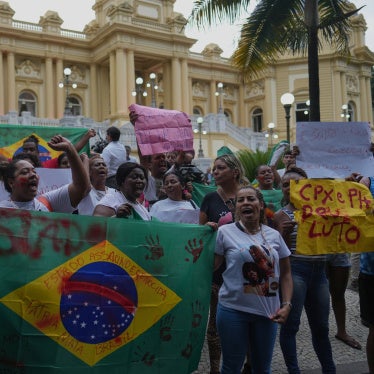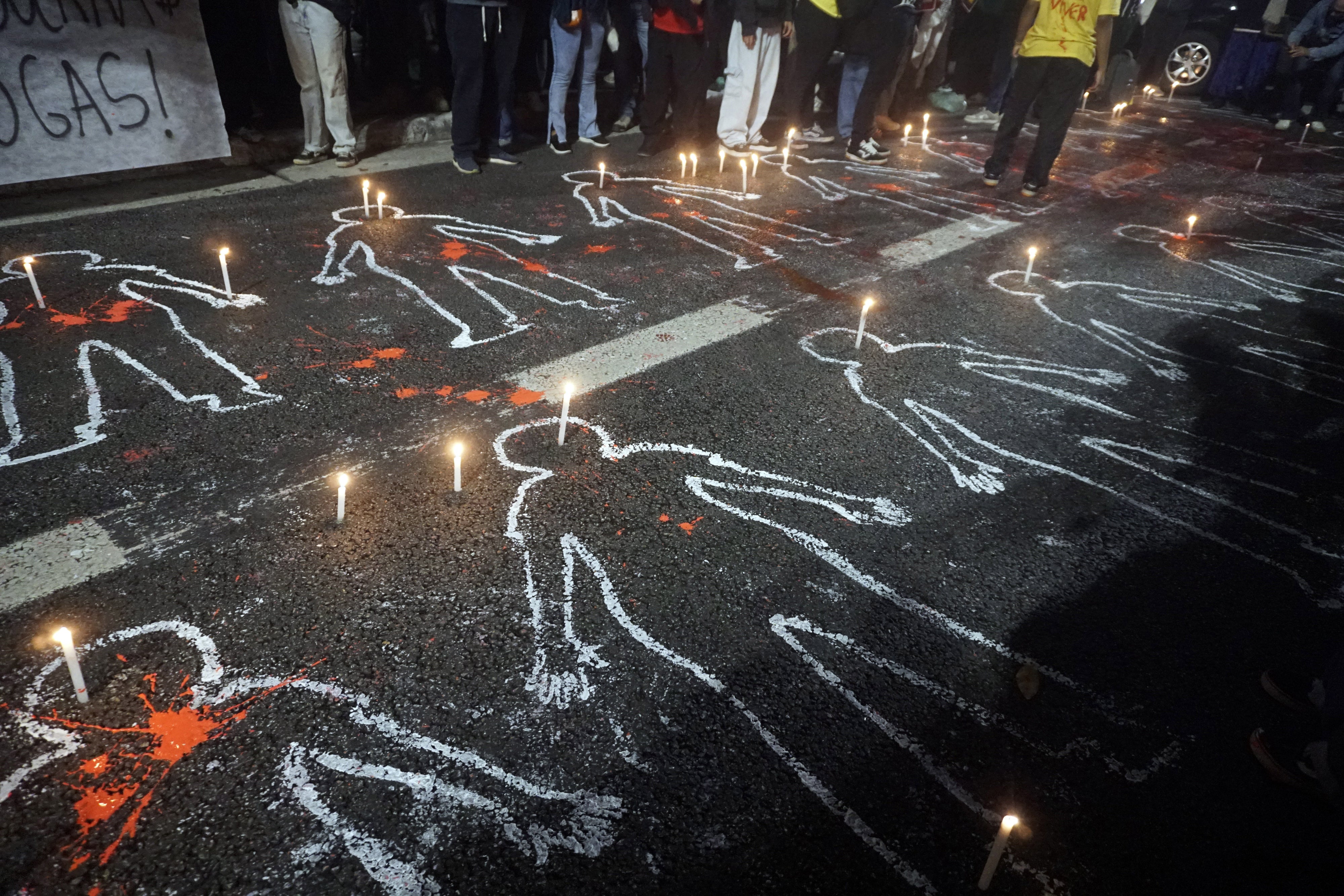
A month after the deadliest police raid in Rio de Janeiro’s history, the Red Command, the organized crime group that was the target of the operation, continues to control the Alemão and Penha neighborhoods. Meanwhile, 122 families, including those of 5 police officers who were killed, mourn the loss of their loved ones. The deadly results and tactics employed raise serious questions as to whether the police command sought, rather than avoided, shootouts.
The Rio state government said that the October 28 raid resulted in the killing of 117 suspects, including two children, while only six members of the public were injured.
The ratio of people killed to those injured – an astounding almost 20 to 1—is the opposite of what one would expect from a police force that has the duty to protect people’s lives and begs the question of whether the true intention was to kill, rather than arrest suspects.
The police explanation of the raid strategy helps understand the deadly outcome. They said that on October 28 several units entered the lower areas of the Alemão and Penha neighborhoods. They pushed gang members up the hillsides through the favela’s narrow passages toward a wooded area.
At the top, the military police elite unit, the Police Battalion of Special Operations (BOPE, in Portuguese) had formed what police described as a “wall.” By the end of the day, the police had left behind scores of bodies riddled with bullets. Fewer than 23 percent of the officers who participated in the raid wore body cameras, despite a Supreme Court ruling requiring it.
Residents told the Public Defenders’ Office that police hid in their homes to ambush suspects on the street. Police use that strategy so commonly that it is known as troia, for the legendary Greek to conquer Troy.
The raid is part of a pattern of abusive use of force by Rio de Janeiro police forces. Ten years ago, when I started researching police conduct in Rio on behalf of Human Rights Watch, police killed five people from each person that they injured, according to official records I obtained. That was especially surprising given that several police commanders and officers told me the forces had poor aim and deficient training.
Police face very dangerous and well-armed gangs in Rio de Janeiro, and some killings by police are in self-defense. Yet, our research shows that in other cases police used lethal force disproportionately, in violation of Brazilian and international law.
The key to determining when self-defense is really the issue is prompt, thorough, independent investigations, which are never carried out in Rio de Janeiro.
After the October 28 raid, police did not preserve the site of the shootings, conduct crime scene analysis, or maintain the chain of custody of evidence. I have documented similar failures in scores of other police killings in Rio in the last decade.
Traditionally, Brazilian civil police have investigated killings by civil and military police. The chief of Rio’s civil police, who has a duty to ensure an independent investigation, showed the folly of this set-up when, before all the bodies had been even identified, he referred to those killed in the raid as “narcoterrorists.”
He was echoing Donald Trump’s language to justify extrajudicial killings of suspected drug traffickers in the Caribbean.
Prosecutors, not police, should lead these investigations under both a recent Supreme Court ruling and a resolution by the National Council of Prosecutors.
In addition, forensic procedures should be independent. But Rio de Janeiro is one of seven Brazilian states, together with the federal district, in which official forensic units are subordinate to the civil police.
The October 28 investigation also needs robust involvement by federal prosecutors, assisted by federal police, since state prosecutors participated in planning the disastrous raid. Brazil’s attorney general should consider full federalization of the case, an option Brazil’s Constitution allows.
As long as there are no thorough, effective investigations into killings by police, abusive officers will continue to have free rein and abusive raids will continue. These raids threaten police officers who seek to abide by the law as well as the public.
Rio de Janeiro authorities have conducted military-style operations again and again for years without weakening criminal groups. On the contrary, those organizations have expanded to other states and neighboring countries.
Since the operation, police have retreated from the Alemão and Penha neighborhoods and organized crime’s grip on those communities is as strong as ever. The people who died will soon be replaced by other poor, young men with few job and educational prospects.
Rio de Janeiro, and Brazil, needs a new public security strategy based on data and science, which truly dismantles dangerous criminal groups by prioritizing intelligence and investigation, and by targeting money laundering, arms trafficking, and penetration in the legal economy.
That requires much stronger coordination between state and federal law enforcement, which has been hampered by distrust that some members of these agencies may be on the criminal group’s payroll. Prosecutors need to strengthen investigations into allegations of links between organized crime and police and politicians.
Continuing ineffective abusive operations in low-income, mostly Black neighborhoods, undermines the very rule of law that authorities claim to defend, and only results in more bloodshed.