Dear Latin American, Caribbean and European Union leaders,
We are writing to urge you to use the upcoming European Union (EU) – Community of Latin American and Caribbean States (CELAC) summit as an opportunity to address pressing human rights challenges.
Since the last summit in 2023, authoritarian and anti-democratic policies have strengthened across both continents, while global and regional institutions are struggling to respond adequately to the challenges caused by the climate crisis, organized crime, and increasing global inequalities.
As described in more detail below, we urge you to build on the Declaration of the 2023 Summit to tackle pressing human rights challenges in Latin America and Europe, including democratic backsliding, the need for effective and rights-respecting policies to fight organized crime, and environmental degradation.
- Support rights-respecting strategies to address crime and violence
Organized crime in many countries has driven Latin America and the Caribbean as a whole to become the region with the highest homicide rates in the world—15 per 100,000 people, significantly above the rate considered “epidemic violence” by the World Health Organization.
Organized crime groups have been responsible for killings, kidnappings and extortion, including the killing of journalists, human rights and environmental defenders, and other local leaders in Latin America.
In recent years, several regional governments have failed to respond adequately to organized crime, which has put many people at risk. It has also helped fuel increased support for punitive and repressive models of law enforcement that threaten human rights and often go hand in hand with broader attacks on democracy and the rule of law.
Participants of the EU-CELAC summit should:
- Promote effective and rights-respecting security policies that prioritize strengthening the justice response to organized crime groups, addressing social conditions that enable recruitment, especially of children, and countering money laundering and other crimes that allow organized crime to thrive.
- Strengthen judicial and enforcement collaboration between Latin America and the Caribbean and in Europe to effectively investigate and prosecute organized crime.
- Oppose recent US strikes against alleged “narco-terrorist” vessels in the Caribbean Sea and Pacific Ocean, which amount to extrajudicial executions and misuse the pretext of a non-existent armed conflict to justify these unlawful killings.
- Prioritize cooperation efforts to improve investigative and forensic capacity throughout Latin America and the Caribbean.
- Publicly and privately oppose human rights violations committed by security forces in the fight against organized crime and press authorities to ensure respect for human rights and the rule of law.
- Uphold fundamental rights and prevent democratic backsliding
Latin America and the Caribbean have experienced the advance of authoritarian governments that are threatening human rights, undermining the right to vote and to have those votes counted, eliminating term limits, arbitrarily detaining opposition leaders, journalists and civil society activists, attempting to introduce regressive policies that would violate women’s and LGBT people’s rights, and repressing peaceful protests.
In the European Union, the failure to take action against persistent systematic and well-documented breakdowns in the rule of law, as in the case of Hungary, tests the EU’s mechanisms to protect its core values. Shrinking space for civil society in some countries, funding cuts for civil society at the EU and member state levels, and a focus on securitization further undermine respect for international law and human rights standards.
At the same time, both regions have seen a dramatic increase in polarization that fuels xenophobia and erodes trust in human rights frameworks and multilateralism more broadly.
Participants of the EU-CELAC summit should:
- Uphold rule of law and democratic principles such as judicial independence, transparency, free speech, independent media and other basic freedoms.
- Commit to working with freely elected leaders and to supporting free and fair elections in places where they do not occur.
- Raise concern about cases of political prisoners in Latin America and the Caribbean, including human rights defenders, journalists, and members of the political opposition.
- Seek to jointly work in multilateral fora, including the UN General Assembly and the UN Human Rights Council, to defend human rights consistently, including condemning abuses by governments, regardless of their ideology.
- Address climate change and environmental destruction
The year 2024 was the warmest on record and the first to exceed 1.5 degrees Celsius above pre-industrial levels. As temperatures continue to rise, the human cost of inaction is devastatingly clear: climate change threatens people’s fundamental rights, such as the right to health, food, and life.
The upcoming UN Framework Convention on Climate Change conference, COP30, offers a vital opportunity for decisive action to implement the phase out of fossil fuels—the main driver of climate change—and to do so in a way that protects human rights and supports a just transition.
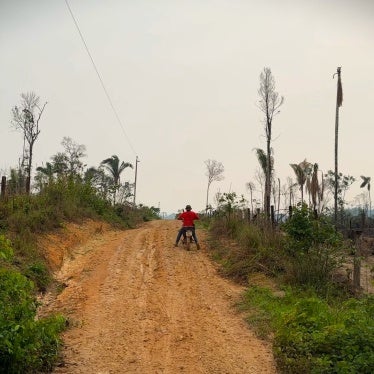
Forests play a crucial role in mitigating climate change, as they act as carbon sinks and are a source of livelihoods for millions of people. The destruction of the Amazon is a particular threat to the global climate, as deforestation and forest fires release greenhouse gases and reduce the rainforest’s capacity to absorb carbon. The Amazon continues to get closer to a “tipping point” from which it would not recover.
Rampant environmental destruction is devastating the livelihoods of Indigenous and other peoples dependent on the forest, who face intimidation and violence by landgrabbers, ranchers, miners, and others involved in illegal activities. Many of the commodities produced on deforested land in the Amazon, particularly timber, beef and leather, are exported to Europe.
Participants of the EU-CELAC summit should:
- Develop national timelines to phase out fossil fuels and immediately end new exploration and licensing of oil, gas, and coal projects. At COP30, EU-CELAC countries should promote a global binding, detailed, time-bound agreement to phase out all fossil fuels, while delivering a roadmap for just transition grounded in human rights standards.
- Take urgent measures to protect forests, including addressing the economic incentives that fuel environmental destruction. Latin American and Caribbean countries should develop supply chain traceability systems to help ensure that products are not linked to human rights abuses and illegal deforestation. European governments should support those efforts and double down on policies to increase forest cover and reduce methane emissions from agriculture in Europe, as well as implement the EU Deforestation-Free Product Regulation (EUDR) on December 30, as scheduled, without further delays.
- Latin American and Caribbean countries should uphold the rights of Indigenous peoples and other forest communities by strengthening protection programs; investigating and punishing crimes against them; evicting people illegally encroaching on protected forests; and implementing efficient, fair mechanisms to grant Indigenous and Afro-descendent communities title to their traditional lands, in compliance with international standards. Countries in the region should also ratify and implement the Escazú Agreement, which enhances access to information, public participation in environmental decisions, and access to justice. EU countries should support those efforts and ensure the same respect for Indigenous rights within their own borders.
- Support the bi-regional care pact
Comprehensive, rights-aligned care systems are crucial to upholding human rights and promoting gender equality. They should address the requirements of people with disabilities and older people, not only as people needing care and support but also as people with caregiving responsibilities.
The EU-CELAC summit represents an important opportunity for governments to ensure that the care systems currently being developed in different regions are consistent with an intersectional human rights perspective. It also provides a space to promote the inclusion of organizations of people with disabilities in the design and implementation of these systems.
Unfortunately, the way these systems have been developed in Latin America and the Caribbean does not necessarily align with human rights standards. Many initiatives in the region fail to uphold the rights of people with disabilities and older people to make their own decisions and to build systems in which those who require care and support have control over them. Some progress has been made, as in Uruguay, where a national care system was established in 2015 with the aim of incorporating a rights-based and inclusive approach. Nevertheless, such systems still tend to adopt a problematic perspective by considering people with disabilities and older people as dependents, without giving them an adequate role in shaping and governing the system.
The recent Advisory Opinion No. 31/25 on the Right to Care, issued by the Inter-American Court of Human Rights, highlights that support for people with disabilities and older people is a fundamental dimension of this right.
Participants of the EU-CELAC summit should:
- Ensure that the Bi-Regional Care Pact between Latin America, the Caribbean, and the European Union is aligned with international and regional human rights standards, promotes independent living and autonomy, and guarantees the participation of people with disabilities, older people, and their representative organizations in its design, implementation, and evaluation.
We thank you for your attention to this important matter and stand ready to provide any additional information.
Sincerely,
Juanita Goebertus Estrada, Americas Director, Human Rights Watch
Philippe Dam, EU Advocacy Director, Human Rights Watch